There are always implications for the decisions we make. Sometimes things work out well; sometimes they don’t. For this one Jewish man and family, his poor decision ended up in disaster. ♦
I used to proudly say that my philosophy was to make a decision, then make it the right decision.
As a hard-charging young sales executive in Silicon Valley, that may have seemed strong and assertive.
Today as an older, wiser Christian husband, father, grandfather and business advisor, that worldly philosophy now sounds arrogant and outright silly and foolhardy. A wise man seeks Godly wisdom and direction for himself, his family and domain through proactive prayer, wise Godly counsel, and the Word of God.
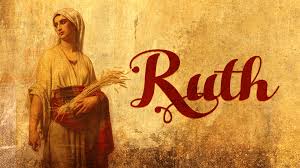
An appropriate lead-in to the Chapter 1 of the BOOK of RUTH.
A Man and His Family
This true story takes place in Bethlehem prior to the life of King David who lived during the latter 10th century BC. These events might have happened between 1250 to 1150 BC during the time of Hebrew Judges, after the exodus of Moses and the entry of the Israelites into the Promised Land led by Joshua.
The last sentence in the preceding BOOK of JUDGES is as follows:
In those days there was no king in Israel; every man did what was right in his own eyes. (Judges 21:25)
And such was the case of this one Jewish man and his family as seen in the opening paragraph of the BOOK of RUTH:
In the days when the judges ruled, there was a famine in the land. So a man from Bethlehem in Judah, together with his wife and two sons, went to live for a while in the country of Moab. The man’s name was Elimelek, his wife’s name was Naomi, and the names of his two sons were Mahlon and Kilion. They were Ephrathites from Bethlehem, Judah. And they went to Moab and lived there. (Ruth 1:1-2)
Due to a regional famine, Elimelek takes it upon himself to move his family out of the Promised Land and into the land of Moab, outside the region where the Hebrews were instructed to live. In that one move, Elimelek was disobedient and paid no attention, or had long lost his commitment, to following the God of his forefathers, who led the Hebrews out of slavery and Egypt centuries earlier.
After living in Moab for 10 years and seeing his sons marry Moabite women, death strikes the men:
Now Elimelek, Naomi’s husband, died, and she was left with her two sons. They married Moabite women, one named Orpah and the other Ruth. After they had lived there about ten years, both Mahlon and Kilion also died, and Naomi was left without her two sons and her husband. (Ruth 1:3-5)
Naomi to Return to Bethlehem
After getting word that the famine was over – that the Lord had come to the aid of his people by providing food for them – Naomi made an offer to her daughter’s-in-law that they could each return home to their own mother’s home:
When Naomi heard in Moab that the Lord had come to the aid of his people by providing food for them, she and her daughters-in-law prepared to return home from there. With her two daughters-in-law she left the place where she had been living and set out on the road that would take them back to the land of Judah.
Then Naomi said to her two daughters-in-law, “Go back, each of you, to your mother’s home. May the Lord show you kindness, as you have shown kindness to your dead husbands and to me. May the Lord grant that each of you will find rest in the home of another husband.” (Ruth 1:6-9a)
After some initial resistance, Naomi reasons with them that they are still young women and should stay in Moab and remarry, and that she is unable, even unfit, to help them.
Then she kissed them goodbye and they wept aloud and said to her, “We will go back with you to your people.”
But Naomi said, “Return home, my daughters. Why would you come with me? Am I going to have any more sons, who could become your husbands? Return home, my daughters; I am too old to have another husband. Even if I thought there was still hope for me—even if I had a husband tonight and then gave birth to sons—would you wait until they grew up? Would you remain unmarried for them? No, my daughters. It is more bitter for me than for you, because the Lord’s hand has turned against me!” (Ruth 9b-13)
Ruth Refuses to Leave Naomi
After more weeping, Orpha leaves, but Ruth remains and makes a famously impassioned statement of her loyalty to Naomi and that she will even convert to Naomi’s God, the God of her forefathers.
At this they wept aloud again. Then Orpah kissed her mother-in-law goodbye, but Ruth clung to her.
“Look,” said Naomi, “your sister-in-law is going back to her people and her gods. Go back with her.”
But Ruth replied, “Don’t urge me to leave you or to turn back from you. Where you go I will go, and where you stay I will stay. Your people will be my people and your God my God. Where you die I will die, and there I will be buried. May the Lord deal with me, be it ever so severely, if even death separates you and me.” When Naomi realized that Ruth was determined to go with her, she stopped urging her. (Ruth 1:14-18)
Ruth and Naomi Return Together
So Naomi and her daughter-in-law, Ruth, returned to Bethlehem to much commotion. But Naomi felt bitter and ashamed.
So the two women went on until they came to Bethlehem. When they arrived in Bethlehem, the whole town was stirred because of them, and the women exclaimed, “Can this be Naomi?”
“Don’t call me Naomi,” she told them. “Call me Mara, because the Almighty has made my life very bitter. I went away full, but the Lord has brought me back empty. Why call me Naomi? The Lord has afflicted me; the Almighty has brought misfortune upon me.”
So Naomi returned from Moab accompanied by Ruth the Moabite, her daughter-in-law, arriving in Bethlehem as the barley harvest was beginning. (Ruth 1:19-22)
Decisions Have Consequences
There are worldly and Godly consequences for every decision we make. We can’t really understand the long term play of God’s hand, but we can know that His ways are good and better than our own self-serving inclinations. So we do best to take our requests and concerns and our critical points of decision-making to God. He hears our pleas and petitions, even our rationale.
But let His will be done, not ours. Let Him override our decisions, even desires, with hearts that yield to His ways, not our own.
We do this through surrendered prayer, through patience and waiting, through the appearance of open and shut doors, or windows, confirmed again in prayer or validated through wise Spirit-led counsel of fellow Christ-followers, or the Word of God. This path is better than side-trips to Moab or places or things that are alluring but false and not a path on which God would have us.
We just need to give Him a chance to guide us.
Can you see where you have made good and less than good decisions in your life?
_______________________________
…Where you go I will go, and where you stay I will stay. Your people will be my people and your God my God… – Ruth 1:16b
Categories: Abundant Living, Books of the Bible, Calling, Devotion, Discipleship, Faith, Family, Fathering, Forgiveness, Israel, Jesus, Manhood, Marketplace, Marriage, Old Testament, Parenting, Prayer, Purpose, Uncategorized
 Biblical Viewpoint
Leave a comment