The story of Ruth continues with the kindness of wealthy man demonstrating compassion for what he sees before him. He is but a man in the hand of a loving God who has a plan well beyond what anyone can comprehend. ♦
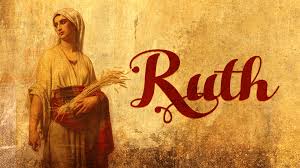
Chapter 1 ended with Ruth traveling back to Bethlehem from Moab after the death of her husband Elimelech. She stayed loyal to her mother-in-law, Naomi, whose own husband and Ruth’s father-in-law had died as well.
It had been 10 years since Naomi and Elimelech had left Bethlehem with their 2 sons as the result of a regional famine. But after Ellimelech died, the sons had married 2 Moabite women, Ruth and Orpah. After a decade, the 2 sons died. Naomi decided to return to her Hebrew homeland and people. Though she encouraged both daughters-in-law to return to their own Moab families, only Ruth vowed to stay with Naomi and become part of Hebrew culture:
Where you go I will go, and where you stay I will stay. Your people will be my people and your God my God. Where you die I will die, and there I will be buried. (Ruth 1:16)
Their trip from Moab back to Bethlehem was less than 50 miles. They arrived just at the beginning of the barley harvest season.
Chapter 2 of the BOOK of RUTH begins with Ruth’s fortunate meeting of a wealthy and kind relative of Naomi named Boaz.
Ruth Meets Boaz
The chapter introduces Boaz and the events that lead Ruth to this man’s barley field to glean or pick up leftover grain behind the workers.1 After noticing her, he inquires about her.
Now Naomi had a relative on her husband’s side, a man of standing from the clan of Elimelek, whose name was Boaz.
And Ruth the Moabite said to Naomi, “Let me go to the fields and pick up the leftover grain behind anyone in whose eyes I find favor.”
Naomi said to her, “Go ahead, my daughter.” So she went out, entered a field and began to glean behind the harvesters. As it turned out, she was working in a field belonging to Boaz, who was from the clan of Elimelek.
Just then Boaz arrived from Bethlehem and greeted the harvesters, “The Lord be with you!”
“The Lord bless you!” they answered.
Boaz asked the overseer of his harvesters, “Who does that young woman belong to?”
The overseer replied, “She is the Moabite who came back from Moab with Naomi. She said, ‘Please let me glean and gather among the sheaves behind the harvesters.’ She came into the field and has remained here from morning till now, except for a short rest in the shelter.” (Ruth 2:1-7)
Boaz Commends Faithful Ruth
Upon learning who she is, the daughter-in-law of Naomi, who had loyally stayed with her after tragedy struck them in Moab, Boaz commends her and then blesses her that she will “be richly rewarded by the Lord, the God of Israel.” He commands his men to protect her and ensures gleaning success for Ruth.
So Boaz said to Ruth, “My daughter, listen to me. Don’t go and glean in another field and don’t go away from here. Stay here with the women who work for me. Watch the field where the men are harvesting, and follow along after the women. I have told the men not to lay a hand on you. And whenever you are thirsty, go and get a drink from the water jars the men have filled.”
At this, she bowed down with her face to the ground. She asked him, “Why have I found such favor in your eyes that you notice me—a foreigner?”
Boaz replied, “I’ve been told all about what you have done for your mother-in-law since the death of your husband—how you left your father and mother and your homeland and came to live with a people you did not know before. May the Lord repay you for what you have done. May you be richly rewarded by the Lord, the God of Israel, under whose wings you have come to take refuge.”
“May I continue to find favor in your eyes, my lord,” she said. “You have put me at ease by speaking kindly to your servant—though I do not have the standing of one of your servants.”
At mealtime Boaz said to her, “Come over here. Have some bread and dip it in the wine vinegar.”
When she sat down with the harvesters, he offered her some roasted grain. She ate all she wanted and had some left over. As she got up to glean, Boaz gave orders to his men, “Let her gather among the sheaves and don’t reprimand her. Even pull out some stalks for her from the bundles and leave them for her to pick up, and don’t rebuke her.” (Ruth 8-16)
Ruth’s Productive Day
Ruth has a productive day, gathering an “ephah” or about 30 pounds of barley grain which could feed a small household for several days. Naomi takes notice that Boaz is a close relative, even a kinsman or guardian-redeemer.
So Ruth gleaned in the field until evening. Then she threshed the barley she had gathered, and it amounted to about an ephah. She carried it back to town, and her mother-in-law saw how much she had gathered. Ruth also brought out and gave her what she had left over after she had eaten enough.
Her mother-in-law asked her, “Where did you glean today? Where did you work? Blessed be the man who took notice of you!”
Then Ruth told her mother-in-law about the one at whose place she had been working. “The name of the man I worked with today is Boaz,” she said.
“The Lord bless him!” Naomi said to her daughter-in-law. “He has not stopped showing his kindness to the living and the dead.” She added, “That man is our close relative; he is one of our guardian-redeemers.” 2
Then Ruth the Moabite said, “He even said to me, ‘Stay with my workers until they finish harvesting all my grain.’”
Naomi said to Ruth, her daughter-in-law, “It will be good for you, my daughter, to go with the women who work for him, because in someone else’s field you might be harmed.”
So Ruth stayed close to the women of Boaz to glean until the barley and wheat harvests were finished. And she lived with her mother-in-law. (Ruth 2:17-23)
Biblical Symbolism
Though only 2 chapters into an intriguing story, the BOOK of RUTH is setting up a powerful list of spiritual themes and symbolic parallels involving familial ties, acceptance of outsiders, Old Testament law, protective coverage, and legal redemption.
May we read and study the Bible for all that it is worth – for instruction and history, and for the understanding of the revelation of God and His hand, His plan, and His redemptive solution and gift for all of us undeserving of profound mercy and love.
Just as we see with Ruth.
Do you understand Ruth at the symbolic level?
_______________________________
At this, she bowed down with her face to the ground. She asked him, “Why have I found such favor in your eyes that you notice me—a foreigner?” – Ruth 2:10
1 Note: Gleaning was the practice of gathering leftover grain from a field after the harvesters had passed through. This served as a natural welfare system implemented across the nomadic Hebrew nation, according to Levitical law (Leviticus 19:9-10, Deuteronomy 24:19), landowners were required to leave the edges of their fields unharvested and not go back to pick up any grain that was missed. This allowed the poor, widows, orphans, and foreigners to gather food for themselves.
2 The Hebrew word for guardian-redeemer is a legal term for one who has the obligation to redeem a relative in serious difficulty (see Leviticus 25:25-55).
Categories: Abundant Living, Books of the Bible, Calling, Devotion, Discipleship, Faith, Family, Forgiveness, Israel, Jesus, Manhood, Marketplace, Marriage, Old Testament, Prayer, Purpose, Uncategorized
 RUTH 1 – A Bad Decision
  Biblical Viewpoint
Leave a comment