Yes, that God has “plans to prosper and not harm us” is the typical interpretation of this famous passage. But do you know what it says immediately before and after this verse? ♦
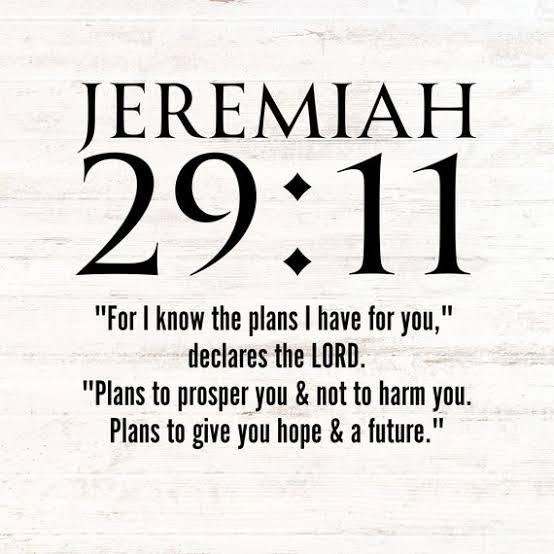 When our now adult daughter was 9-years old and was almost killed in a Lake Tahoe ski accident, our family was greatly comforted by this beautiful and well-known Bible verse, Jeremiah 29:11.
For I know the plans I have for you,” declares the Lord, “plans to prosper you and not to harm you, plans to give you hope and a future.
During her brain surgery and long recovery, she and our family rested on this promise of God and it became a foundation for our young family to surrender our lives to God and trust in Him and His plans, not our own. (For the full story, see 22 Years Ago, posted in 2018.)
While I was comforted, I didn’t know what else to do with it beyond the peace and comfort. Like many Bible verses, these scriptures remind us well that God loves us and that someday it’s all going to be really good.
In the meantime, it’s hard, messy, and at times hopeless.
Eventually, I learned to read and study the Bible in context and with deeper appreciation of key Who, What, When, Where, Why, and How questions. Remember, the Bible was written by over 40 human writers (kings, prophets, shepherds, fishermen, scholars, and a physician) over a span of more than 1500 years. Specially, this means getting clear on Who was writing and Who was the audience receiving the message? What was the context of the message? When and Where was this historically being communicated? And Why was this being said, done, or written?
If you get all that clarified, then you eliminate common misunderstandings of isolated verses. You also begin to understand the tremendous depth, width, and breadth of God’s Word and the profound implications of what the Bible teaches.
Jeremiah 29:11 – a Case Point in Context
Jeremiah lived from about 650 BC to 570 BC. He was called directly to be a prophet of God (read Chapter 1) around 627 BC when he was just about 20 years of age. If you read Chapter 1, you’ll see that this meant he was just to hear the word of God and communicate the message as directed. He did this for the next 50 years until he died.
By the way, him being a prophet of God does not mean that the Book of Jeremiah is about the “end times” and we can understand our own future by reading it. Far from it. Jeremiah delivers an unpopular message, for that time, to the people of Judah, that they are in deep trouble with God for their disobedience (apostasy) and that their city of Jerusalem and days are numbered.
His ministry began during the reign of good King Josiah in the Southern Kingdom and then 4 more successive kings. The Northern Kingdom had already been destroyed by the Assyrians in 722 BC, and now Judah, the Southern Kingdom, about 100 years later, was vulnerable to God’s punishment at the hands of the new world power, the Babylonian Empire, led by Nebuchadnezzar. Ironically, Jeremiah’s ministry began during King Josiah’s attempt to reform the nation of Israel and purge it of idolatry (see 2 Kings 22-23). But his message, with its focus on coming judgment, was consistently rejected by the people. Despite Josiah’s attempts to turn Judah back to God, the people were obstinate and complacent, fully meriting the sentence that would befall them.1
So while he starts his prophesying in 627 BC, what Jeremiah actually predicts is the full fall of Judah and destruction of the city of Jerusalem in 586 BC, as well as the 70-year captivity period before the Jewish people are restored to their homeland. Most consider the 70-year exile timeline started in 605 BC when Nebuchadnezzar forced the capture and exile of the first wave of elite nobles from Jerusalem to Babylon, including a teenager named Daniel (see Daniel 1). The second wave of exiles was in 597 BC and included young Ezekiel (see Ezekiel 2). The third wave came in 586 BC and included the rest of the population exiled from the city which was burned to the ground.
By Chapter 29, Jeremiah dictates a fascinating letter to the exiles. See the verse, Jeremiah 29:11, in context of the whole chapter and the whole Bible:
This is the text of the letter that the prophet Jeremiah sent from Jerusalem to the surviving elders among the exiles and to the priests, the prophets and all the other people Nebuchadnezzar had carried into exile from Jerusalem to Babylon. (This was after King Jehoiachin and the queen mother, the court officials and the leaders of Judah and Jerusalem, the skilled workers and the artisans had gone into exile from Jerusalem.) He entrusted the letter to Elasah son of Shaphan and to Gemariah son of Hilkiah, whom Zedekiah king of Judah sent to King Nebuchadnezzar in Babylon. It said:
This is what the Lord Almighty, the God of Israel, says to all those I carried into exile from Jerusalem to Babylon: “Build houses and settle down; plant gardens and eat what they produce. Marry and have sons and daughters; find wives for your sons and give your daughters in marriage, so that they too may have sons and daughters. Increase in number there; do not decrease. Also, seek the peace and prosperity of the city to which I have carried you into exile. Pray to the Lord for it, because if it prospers, you too will prosper.” Yes, this is what the Lord Almighty, the God of Israel, says: “Do not let the prophets and diviners among you deceive you. Do not listen to the dreams you encourage them to have. They are prophesying lies to you in my name. I have not sent them,” declares the Lord.
Note: So first Jeremiah tells the Jews exiled in Babylon to stand down and settle down. Build houses, marry, and multiply in numbers. Seek peace with your captors and pray for them. Do not be deceived by false prophets who encourage you to fight back. Then here he tells them that they’ll be in exile for 70 years before being released and restored to their homeland:
This is what the Lord says: “When seventy years are completed for Babylon, I will come to you and fulfill my good promise to bring you back to this place. 11 For I know the plans I have for you,” declares the Lord, “plans to prosper you and not to harm you, plans to give you hope and a future. Then you will call on me and come and pray to me, and I will listen to you. You will seek me and find me when you seek me with all your heart. I will be found by you,” declares the Lord, “and will bring you back from captivity. I will gather you from all the nations and places where I have banished you,” declares the Lord, “and will bring you back to the place from which I carried you into exile.”
Note: So the real context of Jeremiah 29:11 is that God has a long term plan for them, restoring them to prosperity and giving them a hope and a future. They are to be contrite and seek God and He will listen to them and bring them back from captivity – which is exactly what happened.
You may say, “The Lord has raised up prophets for us in Babylon,” but this is what the Lord says about the king who sits on David’s throne and all the people who remain in this city, your fellow citizens who did not go with you into exile—yes, this is what the Lord Almighty says: “I will send the sword, famine and plague against them and I will make them like figs that are so bad they cannot be eaten. I will pursue them with the sword, famine and plague and will make them abhorrent to all the kingdoms of the earth, a curse and an object of horror, of scorn and reproach, among all the nations where I drive them. For they have not listened to my words,” declares the Lord, “words that I sent to them again and again by my servants the prophets. And you exiles have not listened either,” declares the Lord.
Note: In other words, bad stuff is coming – death and destruction – to all of these Jews who did not believe God’s coming judgment prophecy of Jeremiah. In fact, it was King Zedekiah’s disastrous revolt against the Babylonians in 588 BC that led to Nebuchadnezzar’s brutal two-year siege and final violent devastation of the temple and entire city or Jerusalem in 586 BC. They were amply warned, but they did not listen.
Therefore, hear the word of the Lord, all you exiles whom I have sent away from Jerusalem to Babylon. This is what the Lord Almighty, the God of Israel, says about Ahab son of Kolaiah and Zedekiah son of Maaseiah, who are prophesying lies to you in my name: “I will deliver them into the hands of Nebuchadnezzar king of Babylon, and he will put them to death before your very eyes. Because of them, all the exiles from Judah who are in Babylon will use this curse: ‘May the Lord treat you like Zedekiah and Ahab, whom the king of Babylon burned in the fire.’ For they have done outrageous things in Israel; they have committed adultery with their neighbors’ wives, and in my name they have uttered lies—which I did not authorize. I know it and am a witness to it,” declares the Lord.
Note: Jeremiah finishes with further confirmation that God is coming after all of those dishonest Jewish priests and authorities (particularly, whoa to one man named Shemaiah) who did not heed God correctly:
Tell Shemaiah the Nehelamite, “This is what the Lord Almighty, the God of Israel, says: You sent letters in your own name to all the people in Jerusalem, to the priest Zephaniah son of Maaseiah, and to all the other priests. You said to Zephaniah, ‘The Lord has appointed you priest in place of Jehoiada to be in charge of the house of the Lord; you should put any maniac who acts like a prophet into the stocks and neck-irons. So why have you not reprimanded Jeremiah from Anathoth, who poses as a prophet among you? He has sent this message to us in Babylon: It will be a long time. Therefore build houses and settle down; plant gardens and eat what they produce.’”
Zephaniah the priest, however, read the letter to Jeremiah the prophet. Then the word of the Lord came to Jeremiah: “Send this message to all the exiles: ‘This is what the Lord says about Shemaiah the Nehelamite: Because Shemaiah has prophesied to you, even though I did not send him, and has persuaded you to trust in lies, this is what the Lord says: I will surely punish Shemaiah the Nehelamite and his descendants. He will have no one left among this people, nor will he see the good things I will do for my people, declares the Lord, because he has preached rebellion against me.’”
Key Takeaway
So there’s the full context of this beautiful little verse, Jeremiah 29:11, that is stitched onto pillows and picture frames. A beautiful verse, yes, but in context a real promise of instruction and vision of a future state that no one could fathom or fully understand.
We know now what followed.
After 70 years the Medo-Persians conquered the Babylonians and their new leader, Cyrus, allowed the Jews back to their homeland with encouragement and permission to rebuild their city and temple (see the Book of Ezra). Nehemiah came to Jerusalem and rallied the forlorn people to rebuild the city walls (see the Book of Nehemiah). The people drifted from God again eventually and were overtaken by the Greeks (by Alexander the Great), who then were overtaken by the Romans (as prophesied in the Book of Daniel). The birth of Jesus occurred during the highpoint of the Roman Empire. Jesus was crucified and fulfilled the promise to Abraham that all the nations would be blessed through his line. Christ’s death concluded the end of the need for animal temple sacrifices as His sacrifice (the perfect Lamb of God) atoned for all sins of mankind and restored any person, Jew or Gentile, back to God.
The rest is history.
It’s a larger story of a great and loving God with a plan to prosper His own, now Jews and Gentiles – all people and nations (see the Book of Romans), and give them a hope and future.
Do you see the larger story in the Bible?
_______________________________
Then you will call on me and come and pray to me, and I will listen to you. You will seek me and find me when you seek me with all your heart. – Jeremiah 29:12-13
1 Cultural Facts and Highlights, in NIV Archaeological Study Bible, Zondervan, notes, p. 1179.
Categories: Abundant Living, Church, Daniel, Devotion, Discipleship, End Times, Ezekiel, Faith, Family, Fathering, Habakkuk, Israel, Jesus, Manhood, Marketplace, Marriage, Nehemiah, Old Testament, Parenting, Prophecy, Purpose


Leave a comment